If you were tasked with picking a single adjective to describe the global rare disease community, “relentless” would fit naturally at the top of the list. With 95% of the more than 6,000 identified rare diseases worldwide having no current treatment, the push for innovation simply never stops.
But one day a year, we do pause for reflection.
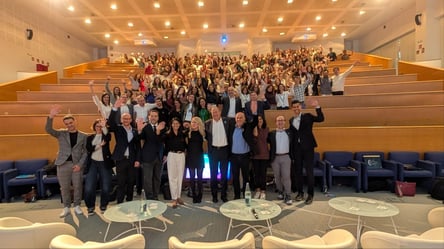
 On February 29 (or February 28, in non leap years), Rare Disease Day events bring together everyone with a stake in finding better treatments, including patients and their families, foundations, advocates, policymakers, researchers, and manufacturers. They welcome the opportunity to share updates, insights, and encouragement with one another. And Viralgen welcomed the opportunity to provide a forum for precisely those kinds of discussions on February 27, 2026, in San Sebastian, Spain. Now in its second year, the event reflects the company’s ongoing commitment to staying close to the patient and foundation communities that give clear purpose to manufacturing innovation.
Emceed by Sandra Rodriguez-Perales, PhD, Board Member of the Spanish Society of Gene and Cell Therapy, Rare Disease Day at Viralgen featured two distinct but tightly intertwined perspectives: those of developers committed to manufacturing rare disease treatments, and those of the patients, families, and foundations who act as critical catalysts for those innovations.
“These kinds of events are important because they help rare diseases gain visibility, and with increased visibility, you increase awareness and diagnosis,” said Guido Senatore, MD, MSc, Vice President & Medical Director, Bayer Iberia. “They also allow us to open the space to put rare disease on the radar for health policy. And when we start to discuss policy, access comes next. And when we discuss access possibilities, then we come one step nearer to solutions to reach patients, families, and healthcare systems.”
Pooja Merchant, MD, MPH, Vice President of Medical Affairs and Global Head of External Engagement & Public Affairs for AskBio, echoed that insight, pointing to the importance of building connections – and strengthening trust – among everyone advocating for better treatments in rare disease.
“I know we hear that rare disease is a lonely space, but I truly believe that by coming together – by creating connections through collaboration – then rare becomes ‘many,’ rare becomes ‘stronger,’ and rare becomes ‘faster,’” she said. “By all of us working together, we can convert ‘hope’ into something we cannot even imagine at this point.”
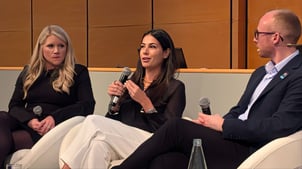 This year at Viralgen’s Rare Disease Day, “hope” from a patient and family perspective was shared by four foundation executives who have very personal vantage points on the impact of rare disease: Chrissy Green and Viviana Rodriguez of Finding Hope for Frizzle (FRRS1L); Dave Backer of the Rett Syndrome Research Trust; and Jesús Merino, President of La Lucha de Abril. Each has a son or daughter with a rare disease for which there is no current treatment.
“As parents, you see your child lose everything and you have to mourn that, to grieve that. . . and it’s an intense experience,” said Green, whose daughter Everly has a rare genetic neurological disease – FRRS1L or “Frizzle” – that has essentially trapped her mind inside a body she can’t control. “But that intense experience is also why we are absolutely motivated and committed as parents to make a treatment happen for our kids. We will not stop until there’s good science that can help these kids get better.”
That good science, Green believes, is already emerging. She reported that in unpublished preclinical studies, Frizzle mouse models have shown promising results when given an AAV gene therapy treatment. That progress prompted her organization to set a September 2026 goal of beginning clinical trials for Frizzle disease with TfR1 CapX, a novel AAV capsid for IV-to-brain delivery developed by Apertura Gene Therapy.
“We’re excited to get to do this together with a rare disease group, because every day they wake up thinking about that disease, and they go to bed every night thinking about that disease,” explained Andrew Steinsapir, a fellow presenter at Rare Disease Day who also serves as the Acting CTO of Apertura. “It’s a privilege to get to be in that position [to help], and it’s a privilege to move things forward together . . . In the capsid engineering field, we’re rooting for everyone on this – there’s so much room to do good.”
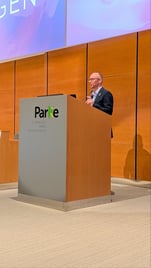 Jimmy Vanhove, the event’s host and CEO of Viralgen and TAAV, explained that Rare Disease Day brings manufacturers closer to the people affected by rare disease and helps them better anticipate how to support them.
“I love this event for a lot of reasons,” Vanhove said. “We get to connect people impacted by rare disease, and we get a clearer perspective on what’s happening in their respective journeys. And it creates an important opportunity for us to step back and say, ‘These aren’t statistics – these are our family, our friends, our colleagues.’ That’s an incredibly important reflection.”
The capstone of the event was an update from one of 2025’s presenters, Špela Miroševič, PhD, Co-Founder and President of the CTNNB1 Foundation.
In a taped address directed to Viralgen employees, she showed before-and-after-treatment videos of her son Urban, who has a rare genetic neurodevelopment disorder (CTNNB1 Syndrome) that affects just one out of every 50,000 children worldwide. In the “before” video, Urban struggles to walk with his mother’s assistance, the spasticity in his legs showing the decline he was experiencing. In the “after” sequence, shot just two months later, following a gene therapy treatment manufactured by Viralgen, Urban is back home, wearing a broad smile and much more effectively navigating his way around his house. The difference is as inspiring as it is striking.
“We don’t expect miracles, but we are finally seeing something we have not seen before – a real chance,” Miroševič said, adding that new clinical trials for a CTNNB1 treatment are planned later this year for Slovenia, Spain, and the U.S. “We all know this program has not started in the laboratory; it has started in the hearts of all of the people who decided not to give up. And for that, I would like to thank you all from the bottom of my heart.”
About Rare Disease Day
Rare Disease Day is a globally coordinated movement dedicated to rare diseases, striving for equity in social opportunities, healthcare, and access to diagnosis and therapies for people living with a rare disease.
Since its creation in 2008, Rare Disease Day has played a crucial role in building an international rare disease community—multi-disease, global, and diverse, yet united in purpose. Rare Disease Day is observed every year on February 28 (or February 29 in leap years—the rarest day of the year). It was established and is coordinated by EURORDIS in partnership with over 70 national alliance patient organizations. The day serves as a powerful focal point, driving advocacy efforts at local, national, and international levels.
To learn more about Rare Disease Day, please visit rarediseaseday.org.